The demands of a warehouse floor
A warehouse floor takes constant punishment. Forklifts with hard wheels pivot and brake on it all day. Pallets get dragged. Joints between slab sections break down at the edges as wheels cross them. Untreated concrete gradually wears, creating dust that settles on stock and equipment and gets into machinery.
Industrial coatings address those problems directly. A properly specified system hardens the surface, stops dusting, resists abrasion from forklift traffic and makes cleaning far easier. Joint repair protects the edges where wheels hit, and striping organizes traffic for safety and efficiency.
Not every warehouse needs a thick epoxy floor. Some need a dust-proofing densifier and sealer; others need heavy-build epoxy in high-traffic zones and simple sealers in storage areas. We assess the operation, traffic patterns and budget and recommend a system that makes sense rather than over-building the whole floor.
Kingman and the surrounding area support distribution, storage, manufacturing and fleet operations, many tied to the I-40 and US 93 corridors. We work with facility managers to plan coatings around shipping schedules, inventory and shifts.
Benefits of a coated warehouse floor
The right warehouse coating pays back through safer operations and lower maintenance.
Abrasion resistance
Coatings built for forklift traffic protect concrete from wear in aisles, turns and loading zones.
Dust-proofing
Sealing stops concrete dust that settles on products, clogs filters and wears equipment.
Safer traffic flow
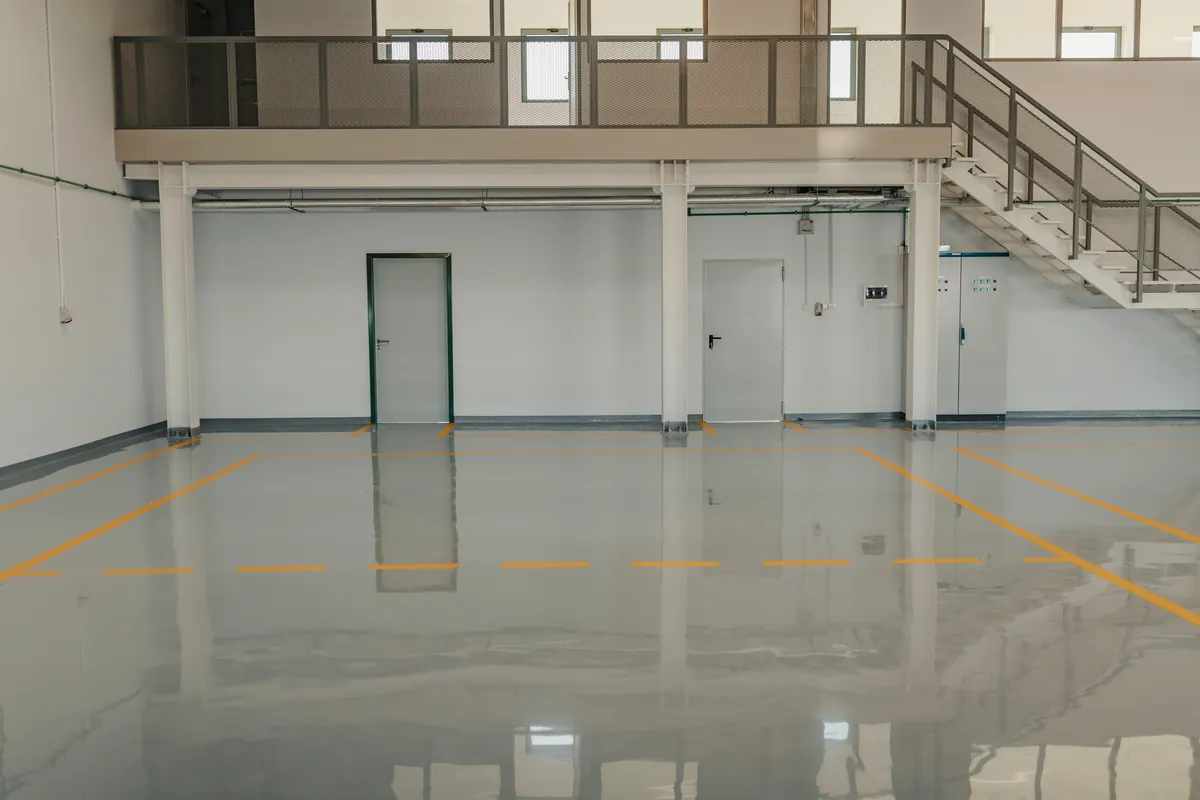
Striped aisles, pedestrian walkways, stop lines and hazard zones reduce collisions and confusion.
Improved lighting
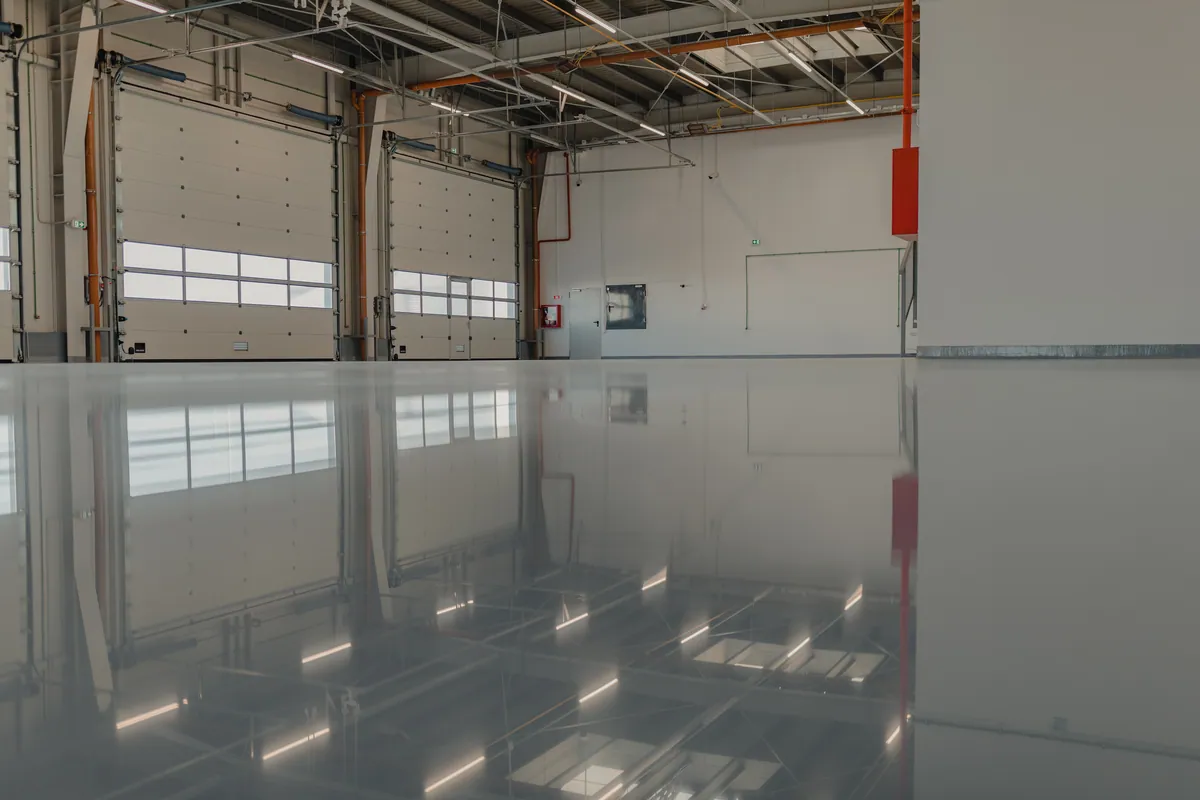
Light, reflective floors brighten aisles and can improve visibility for operators.
Protected joints
Repaired and filled joints prevent spalling and reduce jolts to forklifts and loads.
Easier cleaning
Sealed floors sweep and scrub efficiently, shortening maintenance time.
Industrial spaces we coat
- Distribution centers and storage warehouses
- Manufacturing and assembly floors
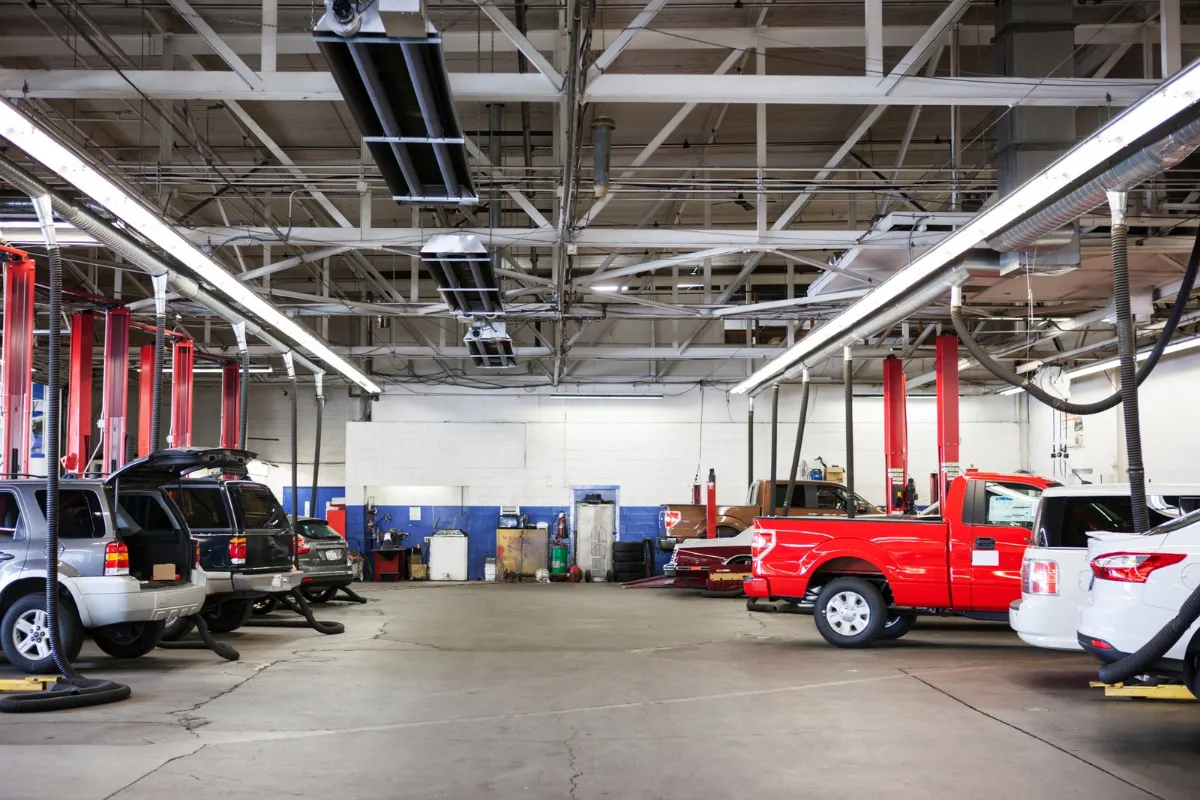
- Fleet maintenance garages and truck bays
- Loading docks and shipping areas
- Equipment yards with covered slabs and hangars
Warehouse system options
We match the system to traffic, budget and operational needs.
Densifier and sealer
A cost-effective option for low-traffic storage areas that need dust control without a full coating.
High-build epoxy
Thick epoxy coatings for aisles and production areas that see constant forklift and foot traffic.
Epoxy with urethane topcoat
Adds scratch and chemical resistance where spills and abrasion are both present.
Slip-resistant aggregate
Textured finishes for loading docks, ramps and wet areas.
Line striping and markings
Durable epoxy or polyaspartic striping for aisles, walkways, parking and hazard areas.
How we handle warehouse projects
Planning matters as much as product. Here is how we approach industrial floors.
- 1
Facility assessment
We review traffic patterns, loads, chemicals, slab condition, joints and moisture.
- 2
Phasing plan
Areas are scheduled so inventory and equipment can be moved and operations continue.
- 3
Surface preparation
Grinding or shot blasting removes contaminants and opens the slab. Damaged areas are repaired.
- 4
Joint repair
Spalled joints are rebuilt with semi-rigid filler that supports wheels and tolerates slab movement.
- 5
Coating application
The specified system is installed in phases with appropriate cure times between traffic.
- 6
Striping and handover
Lines and markings are added, and we provide maintenance guidance for floor crews.
Why experience matters for industrial floors
Large slabs reveal every shortcut. Poor prep leads to coatings peeling in forklift lanes; the wrong joint filler gets chewed out within months; insufficient thickness wears through in turning areas. Fixing those problems later means another shutdown.
We plan carefully, prepare the slab properly and build the system appropriate for each zone, so the floor lasts and your operations are interrupted only once.
Moisture and older industrial slabs
Some of the most challenging floors we see are older buildings that were never meant to be coated. Slabs poured decades ago may lack a vapor barrier underneath, and the ground below can push moisture vapor up through the concrete. Under a non-breathable coating, that vapor can create blisters or cause the coating to release. Oil and chemicals soaked into the slab over years of use can cause similar problems.
Testing up front avoids these surprises. We take moisture readings in several spots and look for contamination during the walkthrough. Where readings are high, a moisture-mitigating primer is added to the system. Heavily oil-soaked areas may need extra grinding, degreasing or a specialty primer. These steps add to the cost, but they are far cheaper than replacing a coating that lets go a year after installation.
Planning a striping and traffic layout
Striping is one of the most cost-effective safety upgrades a facility can make, and it works best when it is planned along with the coating rather than added as an afterthought. Before we lay any lines, we walk the floor with whoever runs the shift. Where do forklifts actually turn? Where do people cut across to the break room? Which doors see the most pallet traffic? The answers shape a layout that people will follow instead of ignore.
A typical layout includes some combination of the following, with colors kept consistent across the building so the meaning is obvious at a glance:
- Forklift travel lanes with clear edges and turn radii marked at intersections
- Pedestrian walkways in a contrasting color, separated from equipment lanes
- Stop bars and crosswalks at doorways, dock plates and blind corners
- Hatched hazard zones around electrical panels, eyewash stations and fire equipment
- Staging squares for inbound and outbound pallets near the dock doors
- Numbered bay and rack markings to speed up picking and inventory counts
Densifier, sealer or full coating?
Facility managers often ask whether they really need a full epoxy floor. The honest answer is that it depends on traffic and what you want to solve. A lithium or silicate densifier hardens the top of the slab and dramatically reduces dusting at a lower cost. It does not add color, does not hold striping as well, and offers limited protection against spills. For dry storage with light forklift traffic, it can be the right call.
A full coating makes more sense where you need chemical resistance, a bright reflective surface, clearly defined zones, or a floor that cleans up quickly after spills. Many buildings land on a mix: high-build coatings in production areas, aisles and maintenance shops, with densified and sealed concrete under long-term racking. We price both options so you can compare.
Maintenance that protects the investment
Grit is the main enemy of any warehouse floor. Desert sand tracked in on tires acts like a fine abrasive under forklift wheels. A regular schedule of sweeping or ride-on scrubbing, matched to how much traffic a zone sees, does more to extend floor life than anything else. Scrubber pads should be the softest grade that gets the job done.
Keep an eye on joints and the areas right inside dock doors. These spots wear first. Catching a small chipped joint edge early and refilling it costs far less than repairing a long stretch of spalled concrete. Striping in the busiest turns may need refreshing every so often, and it is simple to touch up without coating the whole floor again.
Industrial floors in the Kingman area
Warehouses and shops here often have large doors open to the desert. Dust and grit blow in constantly and act like sandpaper under forklift wheels. A sealed, abrasion-resistant surface stands up much better and keeps dust off inventory.
Temperature swings in uninsulated buildings also stress joints and coatings. We select systems and joint fillers that can tolerate movement without cracking.

Warehouse coating questions
Can you coat while we stay operational?
Yes. We phase work so parts of the warehouse stay in use, and we can work nights and weekends.
How long until forklifts can drive on it?
It depends on the product and temperature. Fast-cure systems can return to service quickly; others need a few days.
Do we need to coat the whole floor?
Not necessarily. Many facilities coat high-traffic aisles and production areas and use sealers in storage zones.
What causes joints to break down?
Forklift wheels repeatedly striking unsupported joint edges. Proper joint filling supports the edges and reduces damage.
Can you restripe an existing floor?
Yes. We can add or refresh striping on existing coated or sealed floors.
Do you coat under existing pallet racking?
Coating under racking that cannot be moved is difficult to do well. Most facilities leave rack footprints as sealed concrete and coat the aisles, which is where the wear happens anyway. If racking is being relocated, that is the ideal moment to coat the full floor.
Is the floor slippery for forklifts?
Smooth gloss finishes can be slick when wet or dusty. For ramps, docks and wash areas we add aggregate to the coating so tires and boots keep their grip. Dry interior aisles usually do fine with a standard finish.