How a metallic floor gets its look
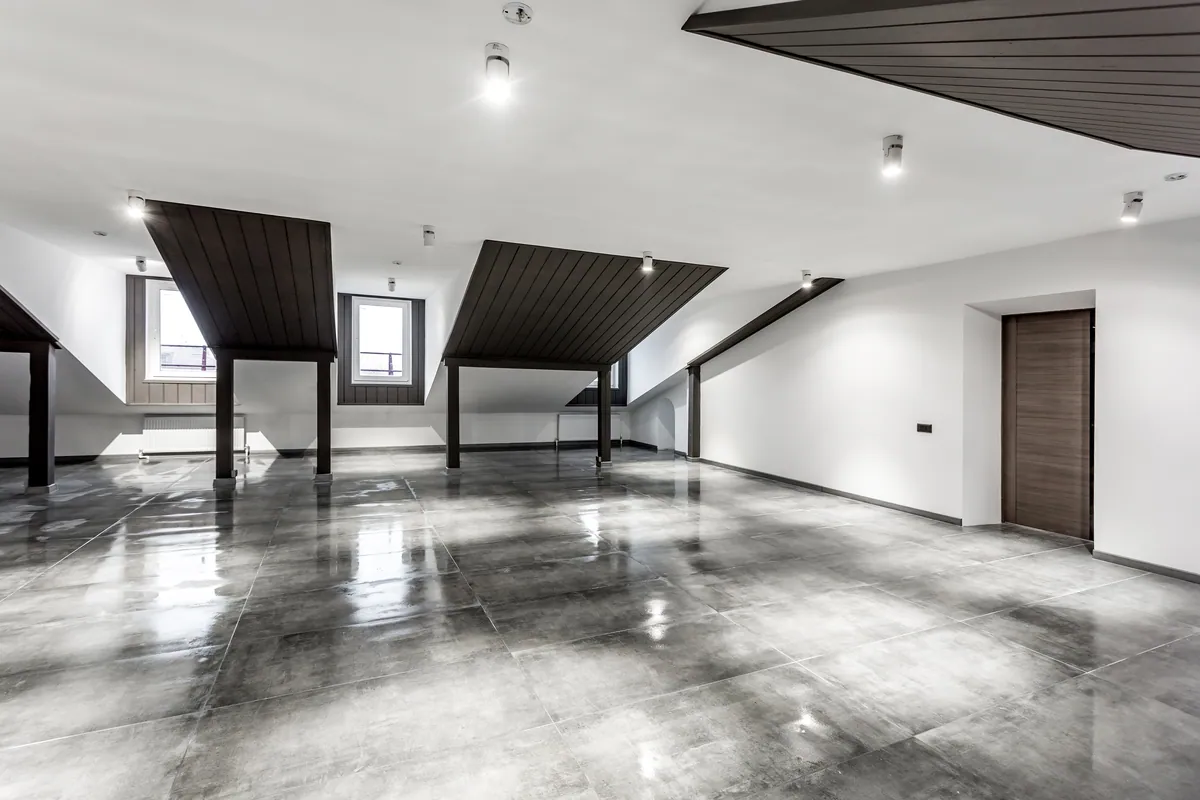
A metallic epoxy floor starts like any other coating: a ground slab, careful repairs and a primer. The difference comes in the main body coat. Instead of a flat pigment, the resin is loaded with fine metallic and pearlescent powders. While it is still liquid, the installer moves it with rollers, trowels, sprayers and sometimes solvent to create flow lines, cells and color shifts. As the resin levels and cures, those movements freeze in place.
Because the pattern is made by hand in real time, every metallic floor is unique. Two floors with identical colors can look completely different depending on technique. That is part of the appeal and part of the challenge. A good metallic floor looks deliberate and balanced across the whole room, not busy in one corner and flat in another.
Metallic systems are mostly an interior choice. They are at their best in living areas, home bars, offices, showrooms, salons and restaurants — places where the floor is meant to be noticed. They can work in a garage too, especially a showpiece garage for a car collection, though they are slicker and show scratches more readily than a flake floor.
In Kingman, warm metallic palettes — caramel, bronze, copper, champagne — tend to sit naturally with desert interiors and stucco walls. Silver, charcoal and pewter give a more modern, gallery-like feel. We work up color samples with you before the job so there are no surprises on installation day.
Why people choose metallic epoxy
A metallic floor is a design decision first, but it brings practical advantages too.
A floor nobody else has
Each pour is unique. The finished surface has movement and depth that tile, vinyl and polished concrete cannot reproduce.
Seamless across large spaces
Open-plan rooms can flow without grout lines or transition strips, which makes a space look bigger and calmer.
Strong, dense surface
Epoxy body coats are hard and abrasion resistant, and a urethane or polyaspartic topcoat adds scratch and chemical protection.
Bright, reflective finish
The pearlescent pigments and high-gloss topcoat throw light around a room, which helps in interiors with limited windows.
Can be renewed
When the topcoat wears in walkways after years of use, it can be refreshed without disturbing the metallic layer beneath.
Spaces suited to metallic floors
- Great rooms, dens and open-concept living areas
- Home bars, theaters and game rooms
- Showroom or collector garages with climate control
- Retail boutiques, salons and tasting rooms
- Offices and reception areas where first impressions count
Metallic styles and color palettes
We usually start with a palette and a movement style, then fine-tune on sample boards.
Marble drift
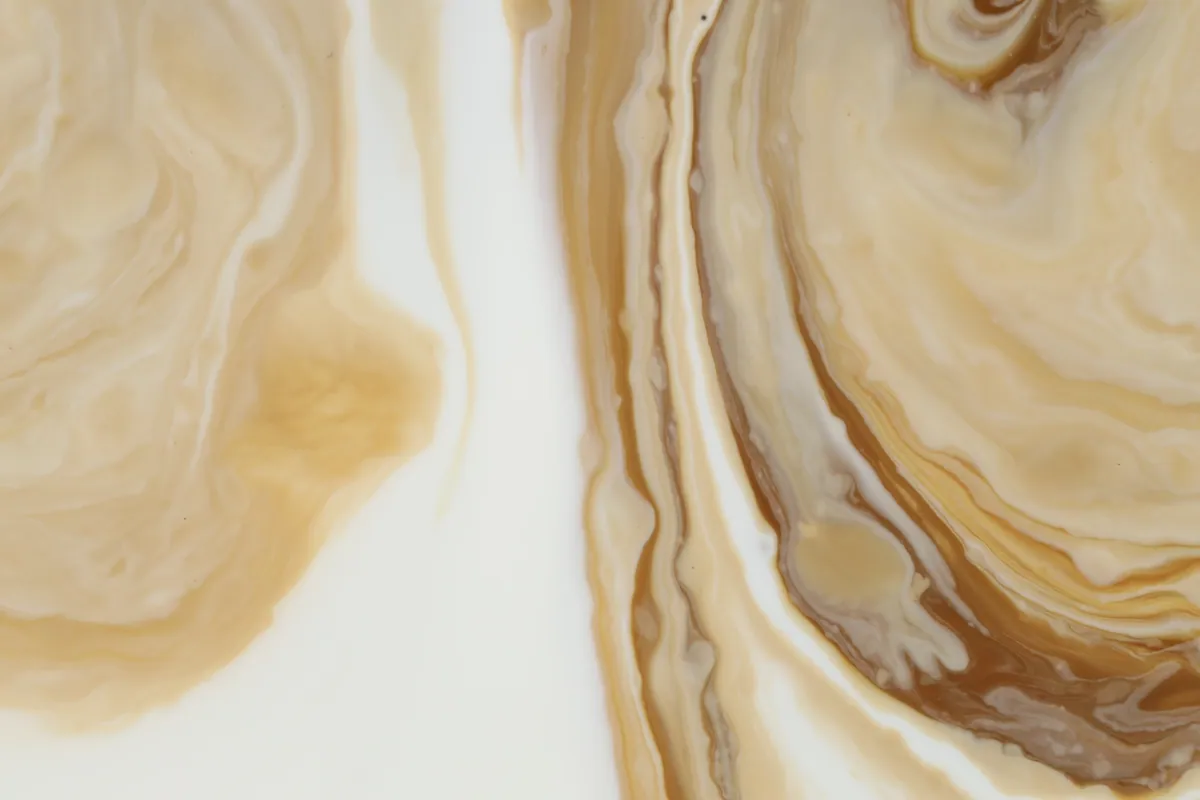
Soft, veined movement that mimics natural stone. Works well in cream, white and gray bases with darker veining for a high-end look.
Lava and cells
Bolder patterns with cells and ridges, often created with solvent spray. Copper, bronze and charcoal combinations look dramatic in bars and showrooms.
Ocean or river flow
Long, sweeping movements in blues, teals and silver. A popular statement choice in modern homes.
Desert neutrals
Caramel, sand, champagne and bronze layered together for warmth. These fit naturally with Southwest architecture and earth-tone furniture.
Sheen and topcoat
High gloss shows off depth best. Satin softens reflections and hides fine scratches, at the cost of a little visual depth.
Installing a metallic epoxy floor
Metallic work moves fast once the resin is mixed, so most of the planning happens before the first batch.
- 1
Design session and samples
We agree on colors, movement style and sheen using sample boards, and talk through how light hits the room at different times of day.
- 2
Grind flat and fill
The slab is ground and every crack, divot and joint is filled. Metallic finishes highlight imperfections, so this stage gets extra time.
- 3
Prime and base color
A primer seals the concrete, then a tinted base coat sets the background color that will show through the metallic layer.
- 4
Metallic body coat
Batches are mixed and placed in a planned sequence. The crew works the pattern while the resin is wet, keeping wet edges alive so sections blend.
- 5
Protective topcoat
Once the body coat cures, a clear topcoat adds scratch, chemical and UV protection and sets the final sheen.
- 6
Cure and care guidance
We advise on when to walk, when to replace furniture and how to clean the floor so the gloss lasts.
Metallic floors are not a beginner project
Metallic epoxy has a short working window, and it is unforgiving. If batches are mixed inconsistently, colors shift from one section to the next. If wet edges are allowed to set, you get visible seams. If the slab underneath has a crack or patch that was not ground perfectly flat, the metallic layer will outline it. Bubbles from outgassing concrete can mar the surface if the primer is skipped.
Experienced crews plan the pour like choreography: who mixes, who spreads, who works the pattern, and in which direction the room is finished. That planning is what separates a floor that looks like art from one that looks like a spill.
A short guide to choosing metallic colors
Most metallic designs combine a base color, one or two metallic pigments and sometimes a contrasting accent. A few simple guidelines help narrow the choices. Light bases with darker veining read as marble and make a room feel larger. Dark bases with bright metallic highlights feel dramatic and moody, and they suit bars, theaters and showrooms. Mid-tone bronzes and champagnes are the most forgiving with dust and footprints.
It also helps to decide early whether you want the floor to blend in or stand out. A blending floor picks up colors already present in the cabinets, stone or wall paint. A statement floor introduces something new, and the rest of the room is usually kept simple around it. Either approach works; mixing the two halfway is where designs can feel unsettled. Sample boards make these decisions much easier than looking at photos online.
Designing around light and furniture
A metallic floor changes character through the day. Morning light from the east tends to bring out cooler pearl tones; low western sun in the late afternoon warms everything up and exaggerates the depth. Overhead LED fixtures create bright hot spots on high gloss. We like to see the room at the time of day you use it most, because that is the version of the floor you will live with.
Furniture placement matters too. Busy patterns can compete with a patterned rug or heavily grained cabinets, while a quieter marble drift lets those pieces stand out. If a large sectional or a pool table will cover much of the floor, it may make sense to concentrate the most dramatic movement in the open areas where it will be seen.
Care and long-term upkeep
Dry mop daily or every few days with a microfiber pad — grit is what scratches a gloss finish. Damp mop with a neutral cleaner and change the water often so you are not spreading a film across the floor. Skip wax, oil soaps and vinegar mixes. Put felt pads on chair legs and use rugs in the main walking paths. When the topcoat eventually shows wear in high-traffic areas, it can be scuffed and recoated without touching the metallic layer.
Metallic floors and desert light
Strong Arizona sunlight is the main thing to plan around. Metallic epoxy body coats can amber under UV, so in rooms with big west or south windows we use a UV-stable topcoat and may steer you toward warmer palettes that age gracefully. Window film or shades also help.
Dust is the second consideration. High-gloss metallic floors show dust and footprints more than flake floors. Many Kingman homeowners choose a satin topcoat or place mats at exterior doors to keep the surface looking its best between dry-mop passes.

Metallic epoxy questions
Is a metallic epoxy floor slippery?
High gloss can be slick with socks or when wet. We can add a fine clear texture to the topcoat that improves grip without hiding the metallic effect.
Can I choose exactly how the pattern looks?
You choose colors and a general movement style, and we show samples. The final pattern is hand-made, so it will be unique rather than an exact copy.
Will furniture scratch it?
Any glossy floor can scratch. Felt pads, rugs in high-traffic paths and a tough urethane topcoat go a long way. Satin finishes show fine scratches far less.
Can metallic go in a garage?
It can, especially for climate-controlled collector garages. For everyday garages with hot tires and dirt, we generally recommend flake instead.
How long does a metallic floor take?
Plan on three to four days for a typical room, including grinding, repairs, base coat, metallic coat and topcoat, plus cure time before furniture returns.