Why bare garage concrete wears out so fast
Most garage slabs around Kingman were finished with a steel trowel and left bare, or rolled with a one-part garage paint by a previous owner. Both look fine for a while. Then the trouble starts: oil spots that never fully come out, tire marks that turn permanent, and a fine powder that keeps appearing no matter how often you sweep. That powder is the slab itself wearing away.
Paint and big-box epoxy kits tend to fail in a predictable spot — right where the tires sit. When a car comes home after a summer drive on I-40 or US 93, the tires can be hot enough to soften a thin film. As they cool, they grip the coating and pull. Do that a few hundred times and the paint lifts in tire-shaped patches. The fix is not a thicker paint. It is a coating that is properly bonded to opened-up concrete and tough enough to shrug off that heat.
Our garage systems start with diamond grinding, which removes the weak, dusty top layer and leaves a surface the primer can grip. From there we build a multi-layer coating: a base coat that bonds and seals, a broadcast of decorative flake or a solid pigmented layer, and a clear topcoat that takes the wear. In most garages, the topcoat is a polyaspartic because it handles UV far better than standard epoxy and cures fast enough to finish in a day.
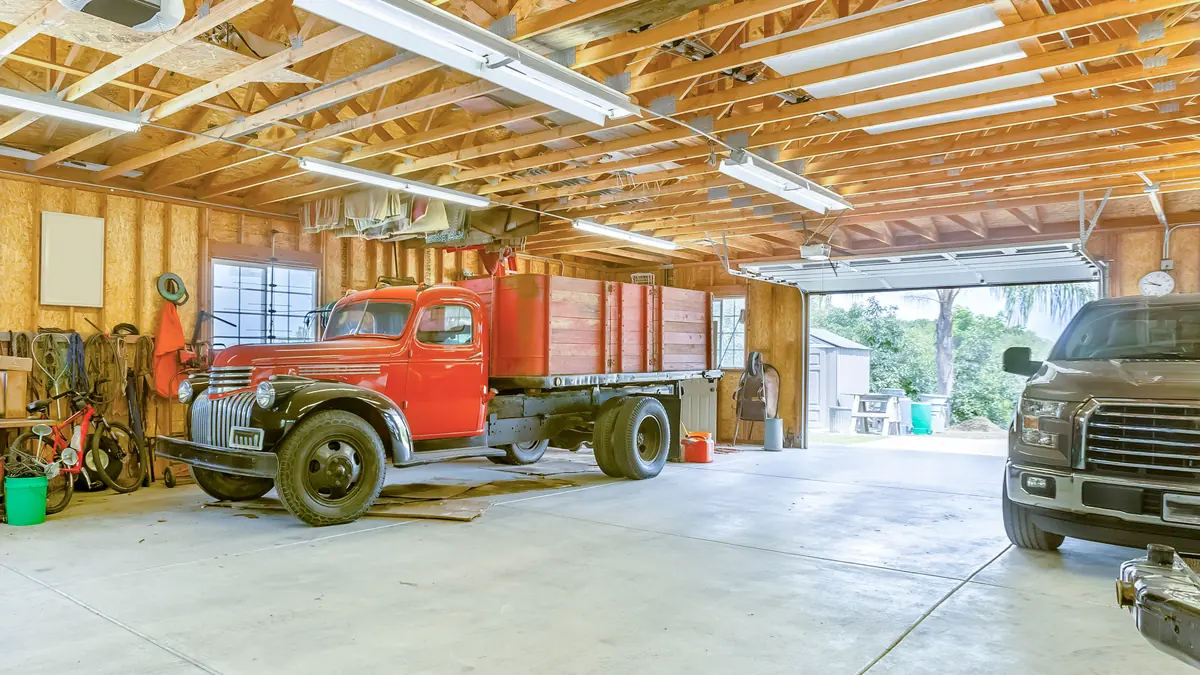
The result is a floor that cleans up with a squeegee and a hose, does not shed dust onto your tools, and gives you something better to look at every time the door goes up. It also changes how people use the space. We hear from customers who finally set up a home gym, a reloading bench or a proper detailing area once the floor stopped being something to apologize for.
What a coated garage floor does for you
A garage coating earns its keep in small ways every week. These are the improvements owners notice first.
Hot-tire resistance
A ground-and-primed slab with a high-solids base coat holds up to tires coming straight off the highway, which is where thin coatings usually fail.
Oil and fluid protection
Motor oil, transmission fluid, antifreeze and brake fluid stay on top long enough to wipe up instead of wicking into the concrete.
Dust control
Sealing the surface stops the slab from dusting. Shelves, storage bins and the cars themselves stay noticeably cleaner.
Easier cleaning after storms
When a monsoon cell drops mud and grit through the door, a coated floor rinses out with a hose and a floor squeegee.
Grip where you need it
Full-broadcast flake gives a textured surface, and we can add fine aggregate to the topcoat for extra traction near the door and steps.
A brighter workspace
Light flake blends and gloss topcoats reflect a surprising amount of light, which helps in garages with one or two overhead fixtures.
Garages we coat most often
- Attached two- and three-car garages in subdivisions around Kingman
- Detached shops and RV garages on larger lots in Butler and Golden Valley
- Home gyms, hobby benches and woodworking spaces
- Golf cart and side-by-side storage bays
- Garage-to-casita or game-room conversions where the floor will be lived on
Garage coating systems and finish options
Most garages fall into one of four systems. We will recommend one after seeing the slab, but here is how they compare.
Full-broadcast flake
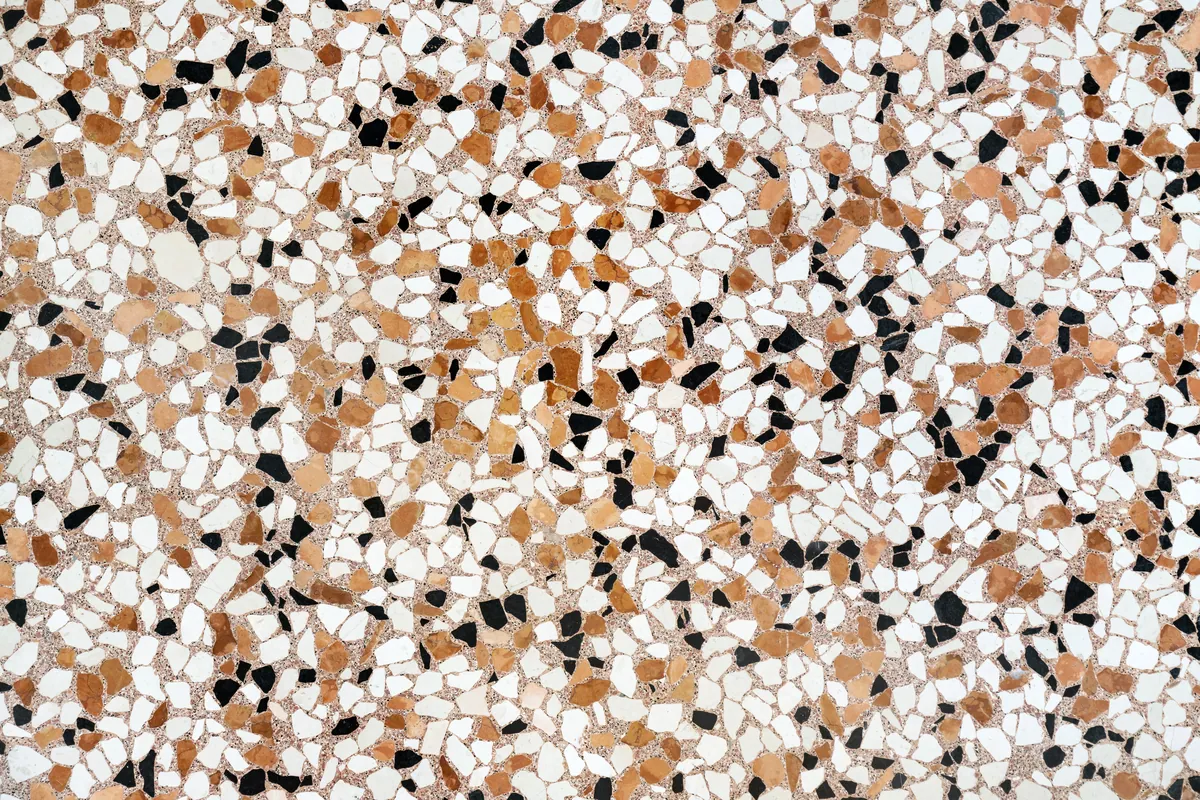
Our most popular garage floor. Vinyl flake is broadcast to refusal into the base coat, then scraped and sealed. It hides dust, small chips and tire marks better than anything else and offers built-in texture. Blends range from soft beige and gray to bold desert reds.
Partial flake
A lighter scatter of flake over a solid color base. It reads cleaner and more modern, and costs a little less in material. It hides less dirt than full broadcast, so it suits tidy garages more than working shops.
Solid color epoxy with polyaspartic topcoat
A uniform gray, tan or charcoal floor with a clear protective top. This is a good fit for shops where you want to spot dropped hardware easily, or for owners who prefer a simple, industrial look.
One-day polyaspartic system
Base, flake and topcoat all go down in a single day using fast-cure chemistry. You can walk on it the next morning and park within a few days, depending on temperature. Ideal when the garage cannot be out of service for long.
How we install a garage floor coating
A typical two-car garage takes one to two days on site. Here is what happens during that time.
- 1
Clear and inspect
Once the garage is emptied, we look closely at cracks, spalling, old paint and any stained areas. A moisture test tells us whether a vapor-tolerant primer is needed.
- 2
Grind the slab
A planetary diamond grinder with a HEPA vacuum opens the surface across the main floor. Edge grinders handle the perimeter and around the water heater platform or steps.
- 3
Repair cracks and pitting
Cracks are routed and filled, divots and pop-outs are patched, and repairs are ground flush. Control joints are cleaned out and either filled or honored, depending on your preference.
- 4
Base coat and broadcast
The base coat is rolled on and, for flake systems, flake is broadcast by hand until the surface is fully covered. The base cures to grab every chip.
- 5
Scrape, vacuum and seal
Loose flake is scraped and vacuumed off, leaving a textured surface. A clear topcoat is rolled over everything, and stem walls are coated to the height you chose.
- 6
Cure and hand-off
We go over walk-on and parking times for the current weather and leave you with simple cleaning instructions. Hot weather speeds cure; cold nights slow it down.
Professional install versus a weekend kit
Retail kits are designed to be forgiving, which means they are thin and mostly water-based. They rely on an acid etch for adhesion, and that etch rarely produces a consistent profile — especially on older slabs with sealer, curing compound or old paint still on them. The kit may look great for a season and then start lifting where the tires sit.
A professional system is thicker, uses higher-solids resins and is applied to a mechanically ground surface. We also deal with the cracks and moisture issues that a kit simply covers up. The difference shows up a few years in, when the professional floor still looks right and the kit is being scraped off so someone can start again.
Garage floors and the Kingman climate
West-facing garages in particular get hammered by afternoon sun whenever the door is open. Standard epoxy yellows under that UV, so we finish garages with a light-stable topcoat. Color choices matter here too — very dark solids absorb heat and show dust, while mid-tone flake blends tend to look clean longer.
Kingman’s winters are colder than people moving from the valley expect. Some coatings need the slab above a certain temperature to cure correctly, so winter installs may need a different product or a heated space. We plan around the forecast rather than forcing a schedule.
Dust is the other constant. Wind pushes fine grit under the garage door seal, and a coated floor makes it far easier to sweep out. If your garage door seal is worn, we will mention it — a new bottom seal and a coated floor make a noticeable difference together.
Garage floor coating questions
How soon can I park in my garage after the coating?
For polyaspartic topcoats, light foot traffic is usually fine the next day, and vehicles can return in about three to five days in warm weather. Epoxy-heavy systems and cold temperatures stretch that out. We give you exact times based on what we installed and the forecast.
Will the flake floor be hard to clean?
No. The topcoat seals the flake, so you are cleaning a smooth, sealed surface with a bit of texture. A dust mop handles most weekly cleaning, and a mild cleaner with a soft deck brush takes care of grime.
Can you coat over the cracks in my slab?
We repair cracks before coating, which makes them far less noticeable. Active cracks caused by soil movement can still reappear over time, and we will tell you if a crack looks like it is moving.
Do I need to move everything out of the garage?
Yes, the floor needs to be completely clear, including shelving that sits on the slab. Wall-mounted storage can stay. Many customers use a portable storage unit or the driveway for a couple of days.
What about the area under my water heater?
If the water heater sits on a raised platform, we coat around it. If it sits on the slab, we can usually work up to the base and seal the edge neatly.