Understanding polyurea floor coatings
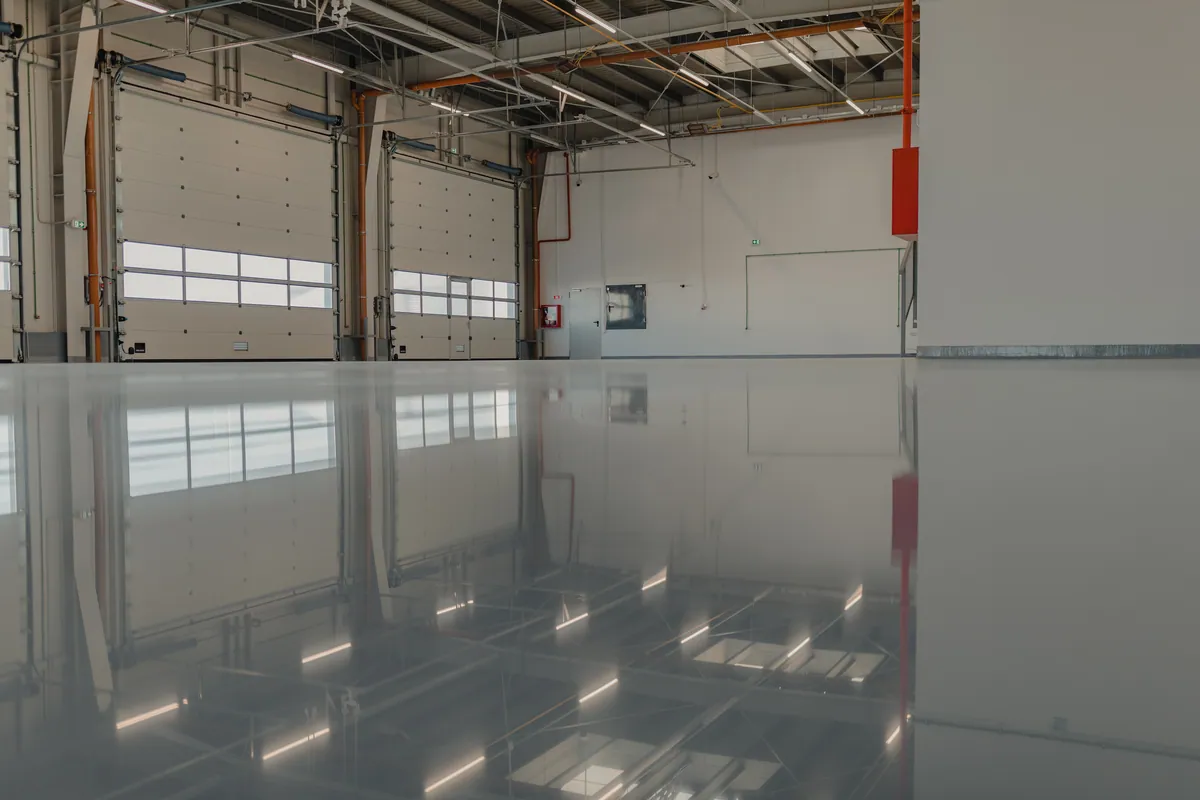
Polyurea is a fast-reacting, two-part coating known for toughness and flexibility. Industrial versions are sprayed onto truck beds, tanks and bridges because they stretch without tearing and resist impact and abrasion. The polyurea we use on floors is formulated for rolling and squeegee application, giving many of the same properties in a form that bonds well to ground concrete.
On a floor, polyurea usually serves as the base coat. It penetrates the opened concrete, bonds tightly and stays slightly flexible after cure. That flexibility is the key advantage. Concrete expands and contracts as it heats and cools. A rigid coating sitting on top has to move with it, and over many cycles that can lead to hairline cracking or delamination along joints. A flexible base absorbs some of that movement instead.
Polyurea also cures quickly, which makes it a natural partner for polyaspartic topcoats in one-day systems. Together they produce a fast, flexible, UV-stable floor that suits garages and shops with demanding conditions.
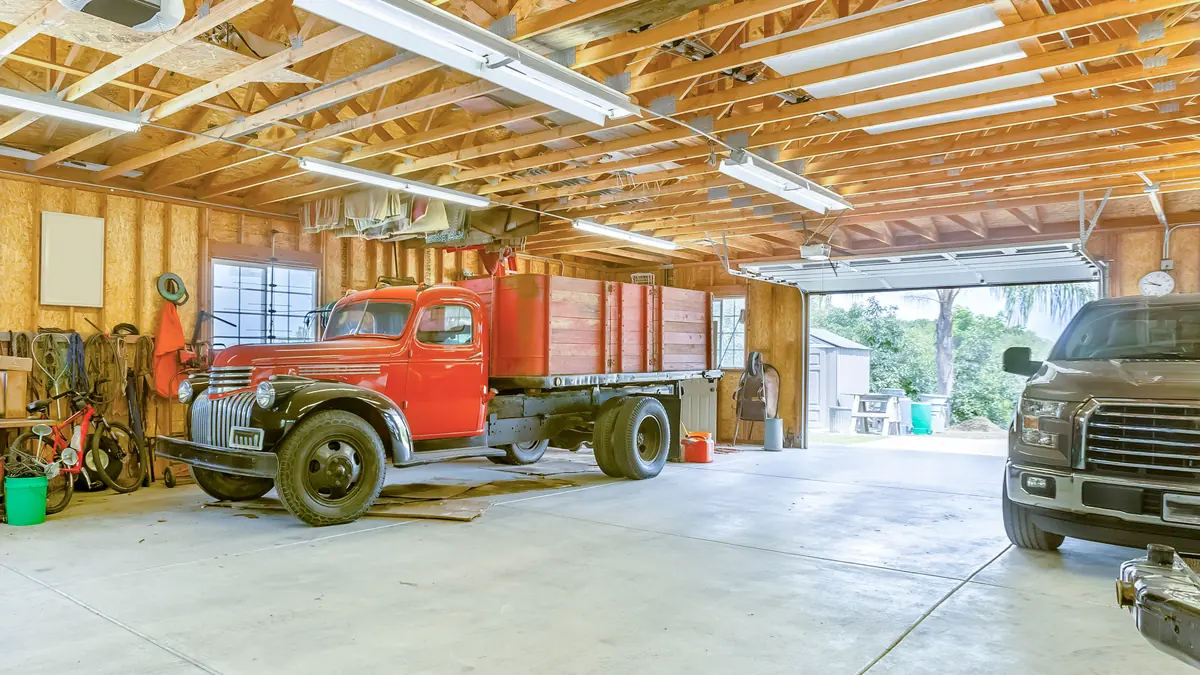
We recommend polyurea most often for detached metal shops, RV garages, older slabs with a history of cracking, and any space without climate control. In an air-conditioned interior with a stable slab, a conventional epoxy base may serve just as well and cost less.
Why choose a polyurea base
Polyurea’s advantages are most valuable where conditions are hardest on a coating.
Flexibility under thermal stress
High elongation lets the coating ride out slab movement from daily and seasonal temperature swings without cracking.
Impact resistance
A slightly elastic film is less likely to chip when a wrench, a hitch or a jack handle hits the floor.
Strong adhesion
Polyurea wets out and bonds deeply into a properly ground slab, giving a solid foundation for flake and topcoat layers.
Fast return to service
Rapid cure means fewer days without your shop or garage, especially when paired with a polyaspartic topcoat.
Tolerates temperature extremes
Polyurea can be installed across a wider temperature range than many epoxies, which helps during cold snaps and warm months alike.
Good candidates for polyurea
- Detached metal shops and pole barns without insulation
- RV garages and equipment bays with heavy, point-loaded tires
- Older garages with a history of hairline cracking
- Workshops with welders, grinders and frequent tool drops
- Garages that need a one-day turnaround in hot or cold weather
Polyurea system configurations
Polyurea is usually the hidden layer, so the visible finish comes from what goes on top.
Polyurea base + flake + polyaspartic top
The most common pairing. Flexible base, decorative flake broadcast, UV-stable clear top. Fast, tough and attractive.
Pigmented polyurea + clear top
A solid-color look for shops where you want to see dropped bolts easily. Gray and tan are popular for hiding dust.
Heavy-build shop system
Thicker base layers and extra aggregate for floors that see floor jacks, engine stands and rolling toolboxes daily.
Textured safety finish
Aggregate broadcast into the top layer for wash bays and wet areas where traction matters more than looks.
Installing a polyurea floor system
The sequence is similar to other systems, but polyurea’s speed shapes how we work.
- 1
Assess slab movement
We look at existing cracks, joints and any signs of settling. Moving cracks influence how we treat joints and whether a flexible system is the right call.
- 2
Grind to a coarse profile
Polyurea bonds best to a well-opened surface, so we grind with tooling that leaves a slightly coarser profile.
- 3
Treat joints and cracks
Static cracks are filled; working joints may be filled with a flexible material or left as joints and coated through.
- 4
Apply polyurea base
The base is applied in small, timed batches. Flake or aggregate goes in immediately if part of the design.
- 5
Topcoat
After a short cure, excess flake is removed and a polyaspartic or urethane topcoat seals the system.
- 6
Cure and use
Foot traffic usually resumes within a day; vehicles and heavy equipment wait a few days depending on temperature.
Getting polyurea right
Fast-reacting coatings leave no margin for slow work. Mixing has to be precise, batches have to be sized to the crew, and the slab has to be dry and clean before the first coat. A professional crew also knows which polyurea formulas suit floors and which are meant for other uses — not every product marketed as polyurea behaves the same.
We also look at the whole slab rather than just the surface. If a crack is moving because of drainage or soil issues, no coating will hide it forever, and we would rather tell you that than let a new floor take the blame.
Joint and crack strategy on moving slabs
How joints and cracks are handled has as much effect on a shop floor’s lifespan as the coating itself. Control joints exist so concrete can crack in a straight line where the builder chose rather than randomly. If they are filled with something rigid and coated over, the movement simply moves somewhere else and a new crack appears. We decide joint by joint whether to fill with a semi-rigid filler, a flexible sealant, or leave the joint open and coat into it.
Random cracks get the same scrutiny. A clean, hairline crack that has not changed in years is usually stable and can be filled and coated. A crack with one side higher than the other, or one that has visibly widened, is a sign of ongoing movement. We will flag those and explain what a coating can and cannot do about them.
Polyurea, epoxy and polyaspartic compared
People often hear all three names in the same conversation and assume they are competing products. In practice they are layers in a system, each chosen for what it does best. Here is a plain-language breakdown of how they differ on the floor:
- Epoxy — rigid, excellent adhesion, builds thickness inexpensively, slower cure, yellows in sunlight. Great base coat in stable, indoor conditions.
- Polyurea — flexible, very fast cure, strong bond, high impact resistance. Ideal base coat where slabs move or temperatures swing hard.
- Polyaspartic — UV-stable, fast but more workable than pure polyurea, tough and clear. The usual choice for topcoats in garages and outdoor areas.
Is polyurea worth the added cost?
A polyurea base typically costs more than a conventional epoxy base, both in material and because the fast cure demands a larger, more coordinated crew. Whether it is worth it comes down to the building. In an insulated, attached garage where the slab stays within a fairly narrow temperature range, a well-installed epoxy base is a sound choice and the extra spend buys little.
In a steel shop that sits closed up through a July heat wave and drops toward freezing in January, the picture changes. Rigid coatings in those buildings are more prone to hairline cracking at joints and lifting at the door edge. If you plan to keep the building for years, paying a bit more now for flexibility usually costs less than repairing a failed floor later.
Living with a polyurea shop floor
Day to day, a polyurea system behaves like any other coated floor. Sweep or blow out grit, clean up oil and coolant before it sits for days, and use a degreaser and deck brush for heavier messes. Put a sheet of plywood or a mat under jack stands and engine stands that will stay in one place for weeks. And keep welding and grinding sparks contained with a fire-resistant blanket, which protects both the floor and the shop.
Polyurea in Mohave County shops
Large lots in Butler, Golden Valley and the outskirts of Kingman often come with a detached steel building. Those buildings can be cold in winter and very hot in summer, and the slabs inside move more than a typical garage. That is exactly where a flexible base earns its cost.
Many of these shops also house trailers, tractors and RVs. Heavy tires concentrate weight on small areas and turn under load. A polyurea base with a heavier topcoat stands up to that twisting much better than a thin film.
Polyurea floor questions
What is the difference between polyurea and polyaspartic?
Polyaspartic is a slower, UV-stable member of the polyurea family. We often use flexible polyurea as the base and polyaspartic as the top to get the best of both.
Is polyurea worth it for an attached garage?
In many attached, insulated garages a standard epoxy base performs well. Polyurea makes the most sense where the slab sees extreme swings or impacts.
Can polyurea bridge existing cracks?
It can tolerate small movements, but cracks should still be repaired. Larger active cracks may reappear regardless of coating.
How thick is a polyurea floor?
Thickness depends on the system. Shop systems are built heavier with additional coats and flake than a standard garage.
Can I weld on a polyurea floor?
Hot slag can mark any coating. We suggest a welding mat or blanket in the welding area regardless of floor type.